   
    |
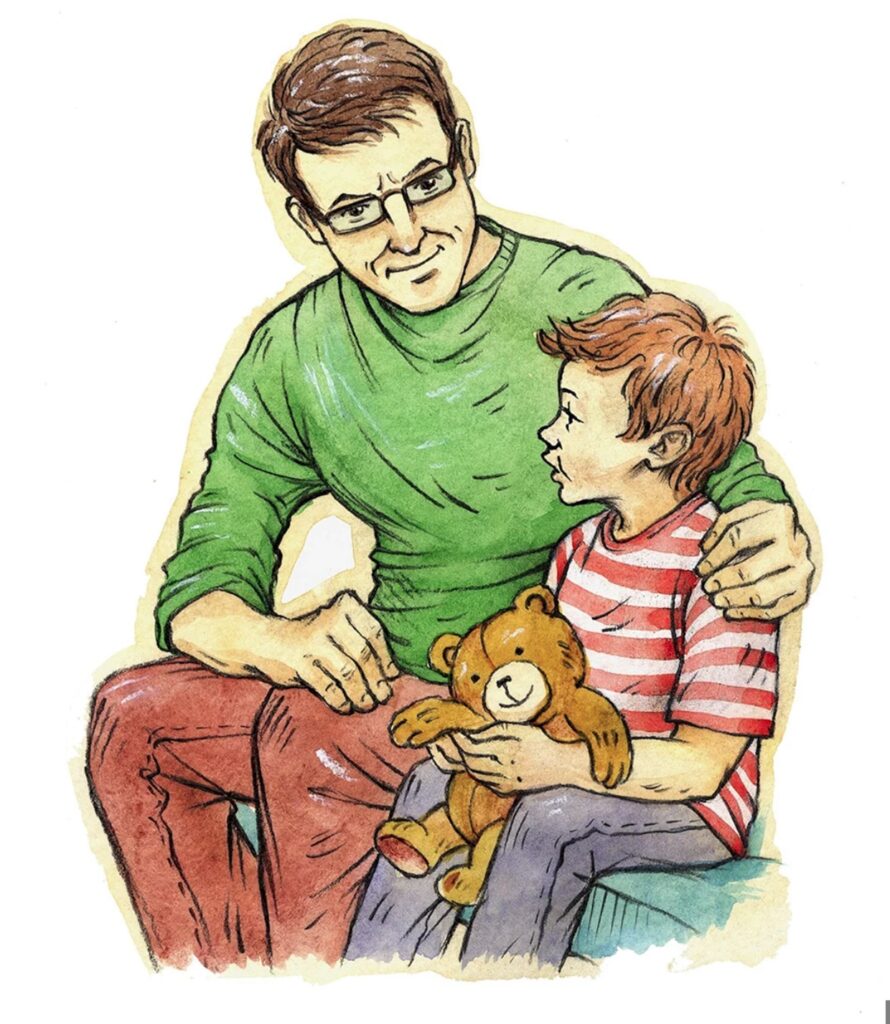
A dad is not someone who brings in money. Beautifully with a message about the importance of dad in a child’s lifeDaddy is a man with whom a child can safely try new things – jumping off sofas, climbing trees, travelling on the bus and paying the fare himself. Daddy is near and he will reliably protect from many problems. Daddy is a man, next to whom you want to be persistent and persevering – to zip up a zip, learn to tie your shoelaces, finish your assignment, pull yourself up on the bar. Daddy teaches you to be persistent. Daddy is a fair man. There are understandable daddy’s rules, which a person, growing up, compares and brings into conformity with his “rules of life”. Dad brings universal rules into a child’s life. Dad is often the final authority. Every child has his own “I’ll tell Daddy!” and “Daddy told me.” For a boy, Daddy is the man you want to be when you grow up. For a girl, Daddy is the husband you want to meet when you grow up. When a real daddy is not present in a child’s life, the child gets used to the “TV daddy” – the images played by actors and musicians in films and on stage. Happy stories about real people are boring to play, so the “TV Dad” is usually either very aggressive or very weak. A child begins to see daddy as a vital person at the age of one and a half to two years old. To prevent this from happening, and the child continues to communicate with the real daddy, we use:
Dad and mum are both irreplaceable people in the life and destiny of a boy and a girl. In the first five years a child makes a huge step from a very tender infant to a small inhabitant of the Earth, who can talk and read, walk and run, work, care and love. And further the little inhabitant becomes brave, powerful, gentle and happy when surrounded by a strong, loving and happy family. Making a family strong, loving and happy is a task that mum and dad can cope with together. Czeslaw Gerasimowicz |