   
    |
Sports development for children from 1 year to 16. The impact of sport on children’s developmentPhysical activity has a huge impact not only on children’s health and physiological development, but also on their psychological well-being. Sport gives kids a great opportunity to be active while having fun and learning valuable life skills. Physical HealthTo help the growth and development of the body, children need a balanced diet, adequate sleep, being outdoors, and one hour of exercise every day. Benefits of exercise for children:
Mental healthWhen a person is physically active, the brain releases serotonin, which creates a sense of well-being. Exercise has been proven to relieve stress, depression, and anxiety. Exercise is a great way to cope with negative feelings, release off-the-charts energy, and relieve tension. Daily physical activity rewards sound sleep, increases mental efficiency, postpones the moment of fatigue. Studies have shown that regular exercise is directly linked to good performance in school, especially in maths, reading, memorising information. Social skills Sport teaches kids valuable skills and life lessons that will be useful in adulthood. Many teenagers feel a sense of inferiority, but team and individual work helps to improve self-esteem and develop self-confidence. In sports, important social skills are acquired and developed to become successful individuals:
How to encourage your child to be physically activeTo instil in your child a love of healthy living, consider age-appropriate sports activities. Every toddler is naturally inclined to certain sports or play activities. As they grow older, their interests and preferences, as well as their physiological capabilities, change. Therefore, do not impose your own decision on the baby, give him the opportunity to try different activities, let him decide for himself. Developing organism requires moderation and consistency in the load, so do not try to make the baby a champion in 3 years. Remember, professional sports, which involve excessively high loads, you can think about professional sports activities, which involve excessively high loads, can be considered no earlier than 10 years of age, provided there are no medical contraindications. Always take into account the age, maturity, physical condition of the child’s body. What sports are suitable for childrenThe sporting life of a child is divided into four consecutive stages. Each period corresponds to the physical and mental state, the level of psychological maturity, the existing working capacity, the acquired skills. Age from 1 to 2 yearsThe main task of parents is to interest toddlers in sports. The proposed tasks should contribute to proper physical and mental development. Predominant exercises – training for general physical development, which will help to develop coordination abilities. At this stage, it is necessary for the crumb to master as many different motor skills as possible. Exercises are performed with minimum intensity. Classes are conducted without coercion. The volume of movements and training time is increased gradually. At this stage, the most effective variant of training is a game. Age 3 to 5 years
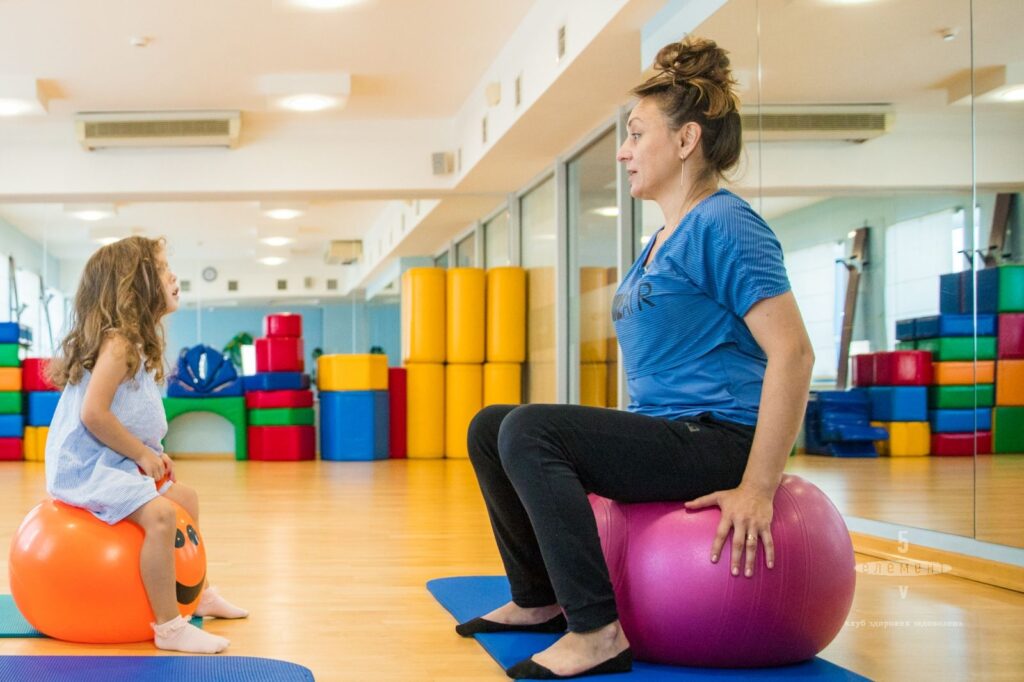
The goal of adults is to form a stable positive attitude towards sport in children. Physical activity at this age has several objectives: harmonious development of the organism, health promotion, support of natural physical and mental maturation. Outstanding sports achievements are not a priority. Emphasis is placed on further improvement of coordination abilities, improving the speed and dynamics of movements. Toddlers of preschool age begin to master many basic arbitrary movements, can link them in “chains”, memorise the resulting sequence. But they are too young from a psychological point of view for organised, clearly structured sports activities. Children of this age group are better suited to unstructured, free, playful activities. Suitable activities are:
Age 6 to 9 yearsBy age 6, visual function, attention concentration, movement coordination, and complex motor skills are perfected. The child’s bone structures are not yet formed. School children should be accustomed to correct posture during sedentary school work. Personality traits are not yet stable. Impulsiveness prevails in the manner of behaviour. The function of arbitrary attention is not developed, a child can concentrate on one task for a maximum of 10-15 minutes. Younger pupils are better at following instructions and are able to exert willpower to solve tasks. The game principle prevails in the training process. The task of adults is to gradually move children from spontaneous movements to systematic physical activity. Carefully controlled strength training is not allowed before the age of seven. At the same time, strength training is only carried out if the child is motivated to develop muscular strength. Particular attention is paid to correct technique, sequence of movements and duration of the exercise. Suitable sports and activities:
Age 10 to 16 yearsChildren in this age group are able to understand, learn and recall the strategic fundamentals of sport. A ten year old can be encouraged to take up challenging team games such as football, basketball, hockey, volleyball. However, it should be remembered that the hormonal changes associated with puberty can impair coordination, reaction speed, and balance. From the age of 10, it is acceptable to participate in almost all types of sports activities. At high school age, an increase in sex hormones significantly increases muscle strength. However, tendons, ligaments, bone structures are not yet ready for high loads. Logical and abstract thinking is actively developing. An understanding of the requirements of discipline and personal responsibility is formed. From the age of 16 it is possible to increase the requirements for training, move to longer and more complex training. By the age of 18, the physical development of most body organs (heart, lungs, muscles, strengthening of bones and tendons) is gradually completed. The body of a healthy person is ready for the demands of great sport. How not to make mistakes – parent’s adviceAvoid deciding too early to play a particular sport. Focusing on one sport discipline will prevent the child from testing natural abilities, developing new skills, engaging in attractive, interesting activities. Parental insistence on a particular section leads to stress and emotional burnout.  Determine whether the exercise programme is:
Be positive, encouraging, praise the child. Emphasise improvements, achievements, new skills. Attend sporting events. Become an example of sportsmanship. Remember: for a child who starts attending a sports club early, the coach is an authority figure. Therefore, the personality of the mentor plays a decisive role, how successful and harmonious the development of a small person will be. Take into account that not every famous athlete can be a competent children’s coach. In the common practice of sports clubs, youth coaches are recruited from among the best athletes. These coaches begin coaching kids without practical experience, and often without the necessary training to teach. It is a failed tactic to view a child as a tool to fulfil their own dreams and desires. Adults often have the feeling that children should achieve what they themselves have not achieved. Insistence and persistence of loved ones, threats and punishments for disobedience – a serious test for the immature psyche of the baby. The main task of parents is not to cause physical or psychological harm to the child. Children often suffer from health problems, such as scoliosis and fractures, due to excessive and unbalanced or insufficient training. Depression and obsessive fears can be the result of stress related to |